Beyond the headlines: keeping our promise to Palestinian children
Why sustained solidarity matters for the care children need today and the futures they deserve.
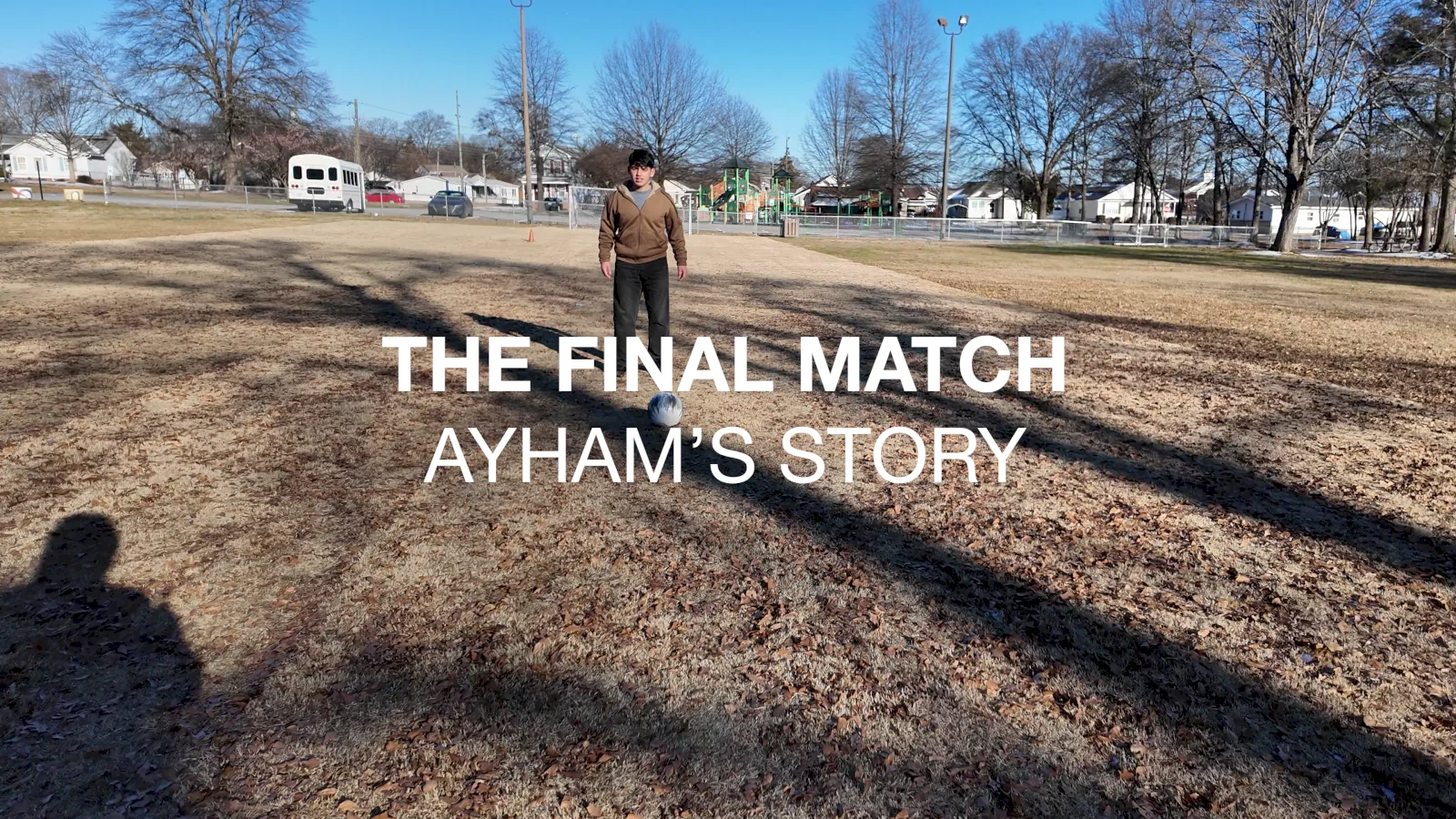
“I felt I wasn’t alone,” Ayham says, remembering the people who welcomed him to the United States. “People with us, behind us, supporting us.” An airstrike in Gaza had fractured his knee in the first months of the war. When he couldn’t find treatment in Egypt, the Palestine Children’s Relief Fund found a hospital willing to operate in Greenville, South Carolina.
His recovery took two operations, with a year of physical therapy between them. By January 2026, he could finally straighten his knee fully. His love of football was returning too, and PCRF arranged a visit to the Greenville Triumph football club. “When I went to the club, I was so happy,” he says. “Hope came back to me.”
The hardest part has been living apart from his family. “But my brother Ismail doesn’t let me feel that at all.”
Recoveries like Ayham’s take years, and the care of many people along the way.
For Vivian Khalaf, chairwoman of PCRF’s Board of Directors, caring for Palestinian children is a personal commitment. Born in Jerusalem, she spent her teenage years under military occupation in the West Bank, an experience that left a lasting mark. She came to PCRF as a donor and volunteer before joining its board, and describes the organization’s promise to children simply: “Circumstances may change, but our commitment to the child doesn’t.”
Keeping that promise means responding to what children need right now while planning for the years of care ahead.
Care as children grow
For many children, medical treatment begins a much longer period of recovery and continuing care. A child who loses a limb, for example, will need that care to adapt as they grow.
“We can’t just give them one prosthetic and tell them they’re on their way. If we care for a child with limb loss, that commitment lasts until adulthood.”
Children with cancer or chronic illnesses depend on treatment for years, too. In June 2026 alone, 1,435 of them received their monthly medication through PCRF. Once a child comes into PCRF’s care, Vivian explains, they remain a PCRF beneficiary until the age of 18 wherever they are, and PCRF continues to look after their medical needs.
PCRF has spent 35 years caring for children in Palestine and the wider region. Since October 7, 2023, it has greatly expanded its relief work as the scale of the catastrophe has left children facing several crises at once. PCRF CEO Lubna Musa describes the destruction of childhood itself: injury, hunger, and bereavement, alongside the loss of familiar routines and relationships. “Many scars are not seen,” she says.
For children living through this crisis, recovery also involves their emotional health and their ability to play, learn, and feel safe with other people.
“Children are no longer reacting to a single event, but living within a prolonged state of trauma.”
Supporting Palestinian children through the emergency means sustaining the care and local services their futures depend on now. Urgent treatment, rehabilitation, practical support for families, mental health support and restoring healthcare cannot be treated as separate stages, with some postponed until the crisis is over.
children on long-term treatment kept supplied with medication in a single month
June 2026Children stay in PCRF’s care through to adulthood, wherever they live
Continuing careSupporting the whole family
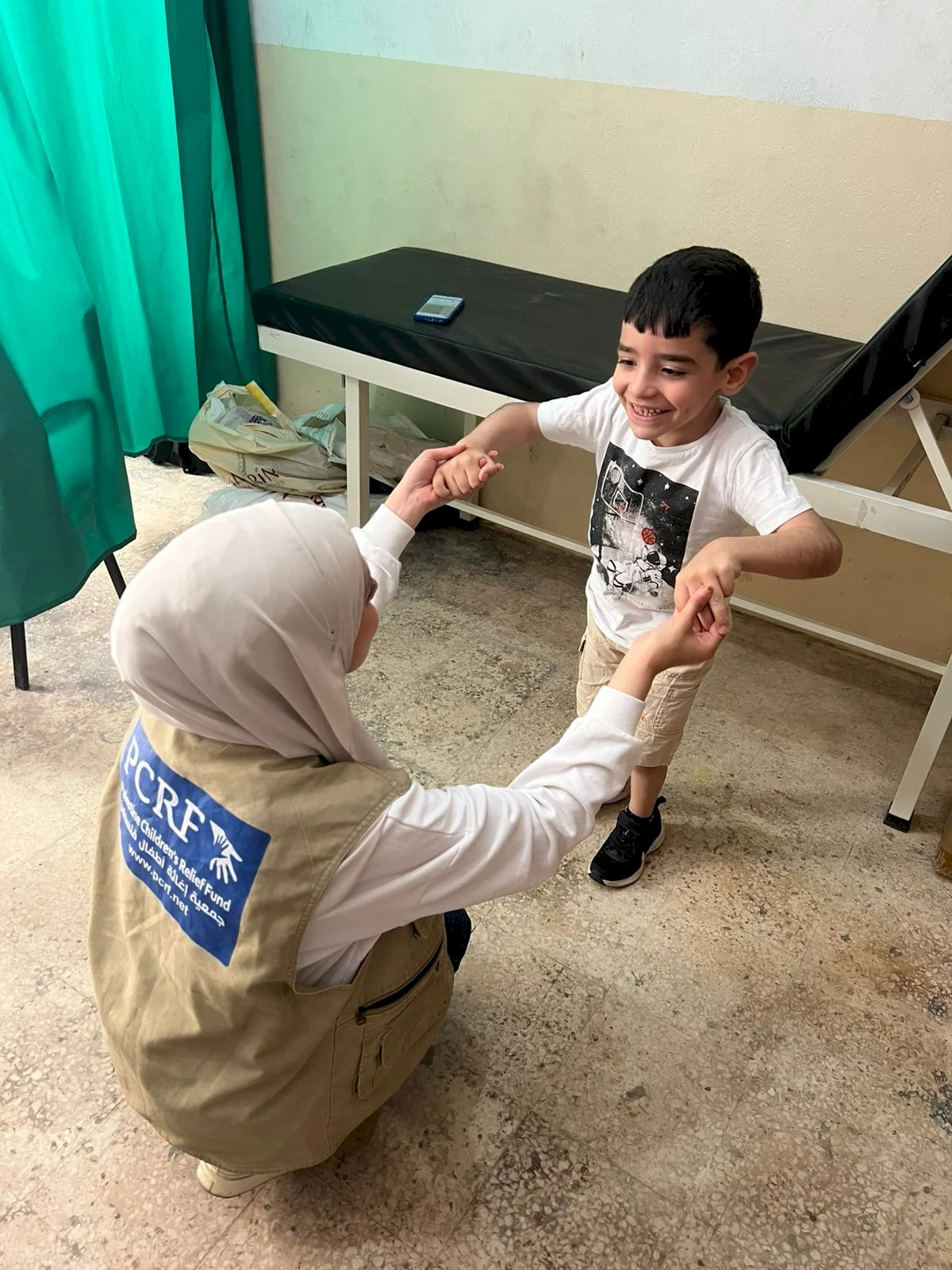
Ahmad sees firsthand how closely these needs are connected. Once supported by PCRF’s amputee program, he became an early member of WeCan, a team of humanitarian field workers who have all been treated through PCRF’s treatment abroad or amputee programs. His work in Gaza City and northern Gaza includes distributing food, drinking water and medical supplies, and listening to what families need.
“I know that providing a prosthetic limb or appropriate medical treatment is important,” he says. “But at the same time, the family may be struggling to afford food or the transportation costs required to reach healthcare services.”
He remembers a ten-year-old boy who came back every month to collect a food parcel for himself and his older sister who was ill, after both their parents had died. At ten, he had become the person his sister depended on.
Children like him are the reason PCRF builds its response around the whole household. Enough food for a family can ease the pressure on a caregiver and protect a child from having to work, or take risks to find something to eat. Support for caregivers, including for their own mental health, helps them look after children while coping with their own losses.
Humanitarian workers face many of the same hardships. Ahmad remembers being unable to provide enough for his own family during a period of hunger in northern Gaza, despite working in humanitarian relief. PCRF colleagues in Gaza continue this work while living through the same insecurity as the communities they support.
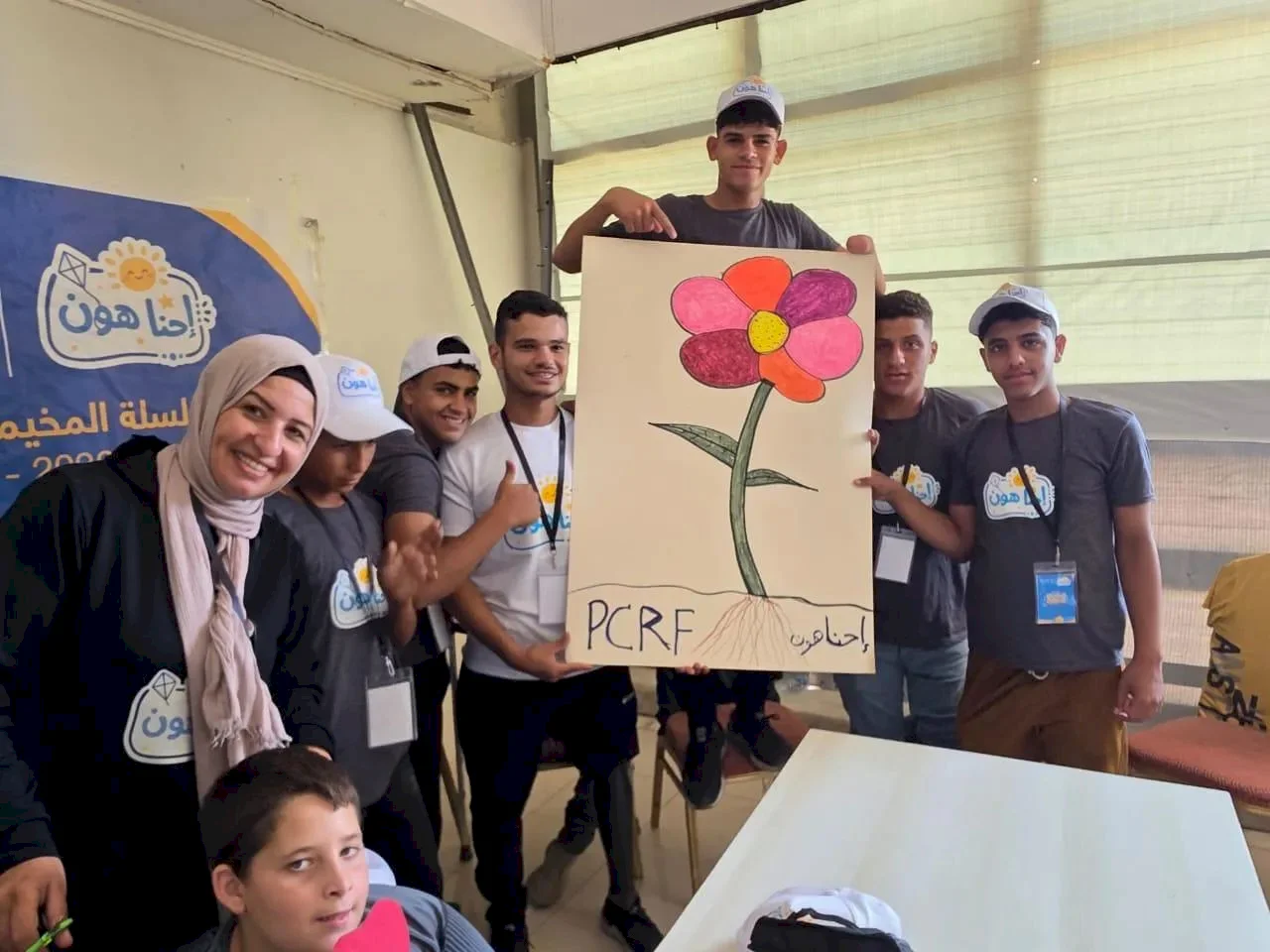
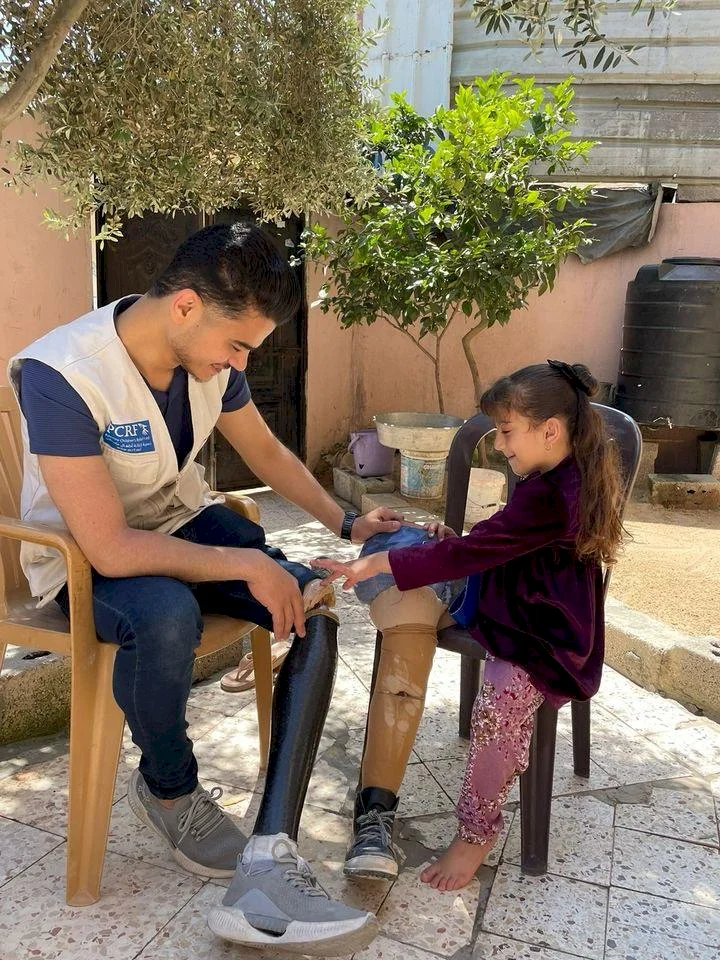
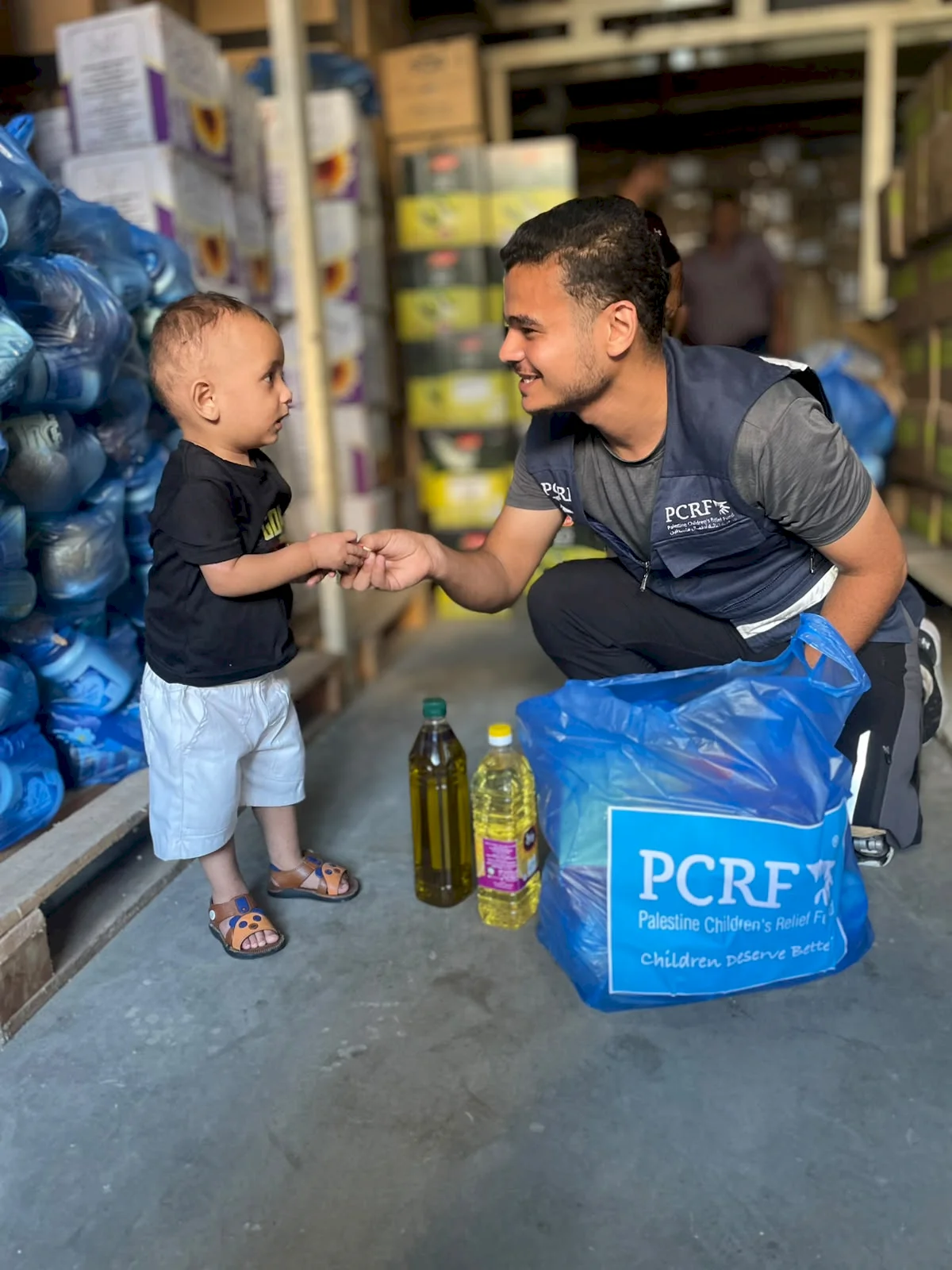
WeCan team missions, with Ahmad
Restoring hospitals close to home
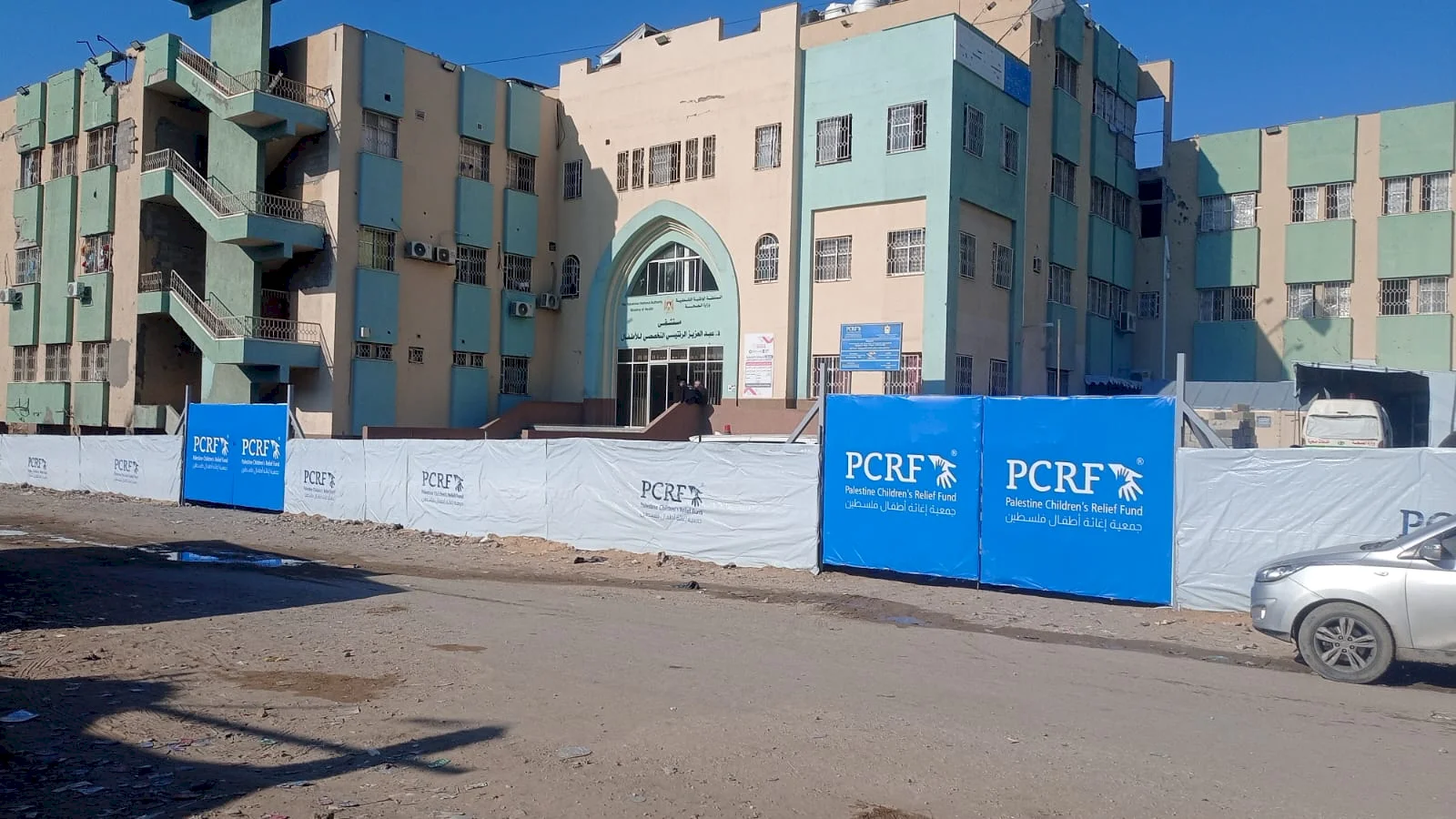
PCRF’s cancer department in Gaza grew out of the need to keep treatment close to home. In 2019, PCRF helped open the department within the Specialized Pediatric Hospital in Gaza City, known as Al Rantisi. It was the first department of its kind for children in Gaza. Mahmoud, PCRF’s Infrastructure Projects Manager, remembers that before then, children from Gaza had to travel to PCRF’s cancer department in Beit Jala in the West Bank, for treatment that could last for months. Because of permit restrictions, some came without either parent. Artists from Costa Rica painted the new department’s walls, and its playroom became a hub for play and mental health support. It gave children space to be children, even through cancer treatment.
In November 2023, the department was hit and the hospital evacuated. When PCRF began repairs in 2024, many colleagues in Gaza and beyond questioned it. Why rebuild a hospital that could be destroyed again? Mahmoud remembers Lubna’s answer: “If they demolish it, we will rebuild. Go ahead.”
With few building materials able to enter Gaza, the team found ways to reuse what was available, turning wooden delivery pallets into offices.
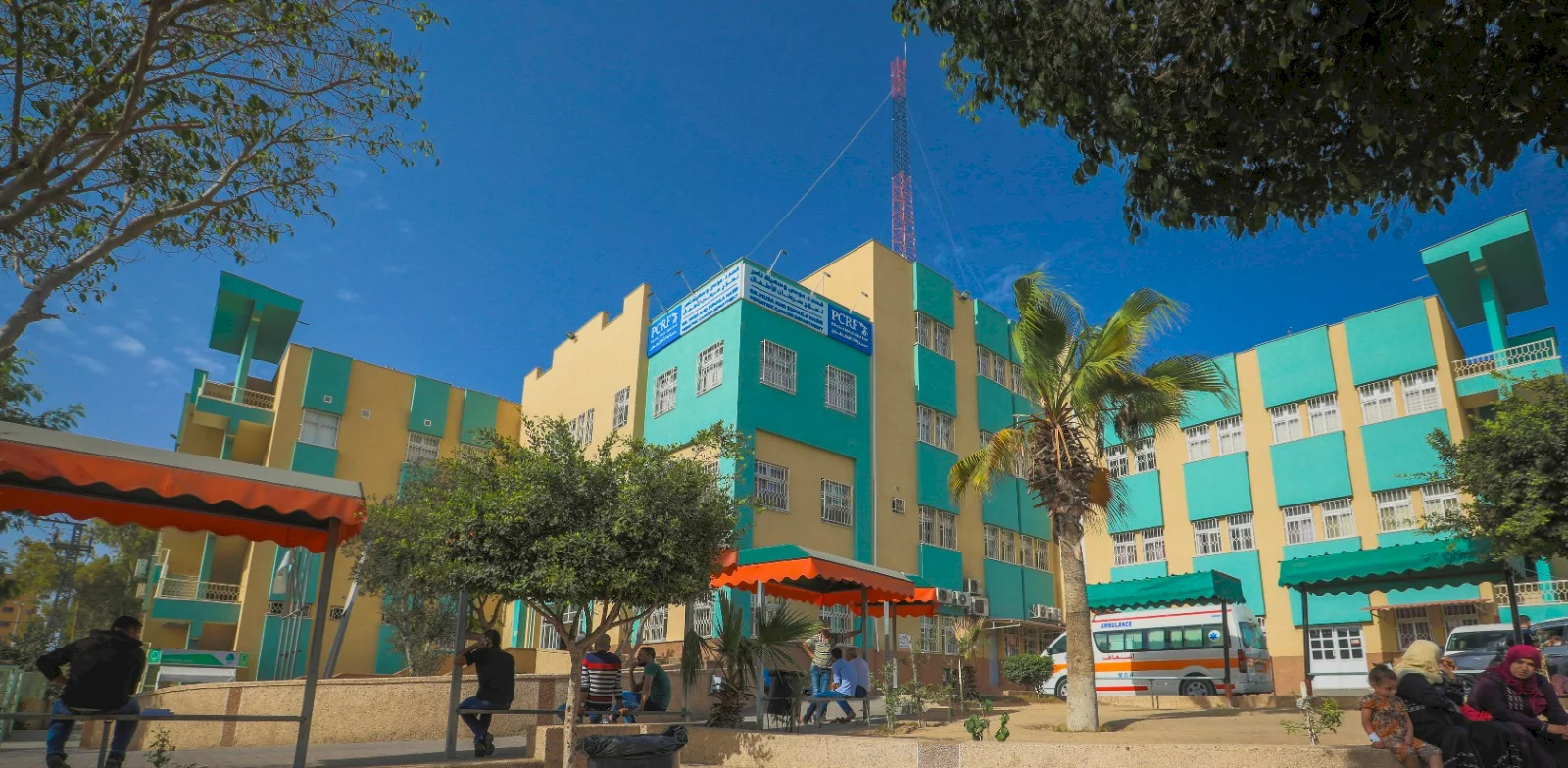 Before the war
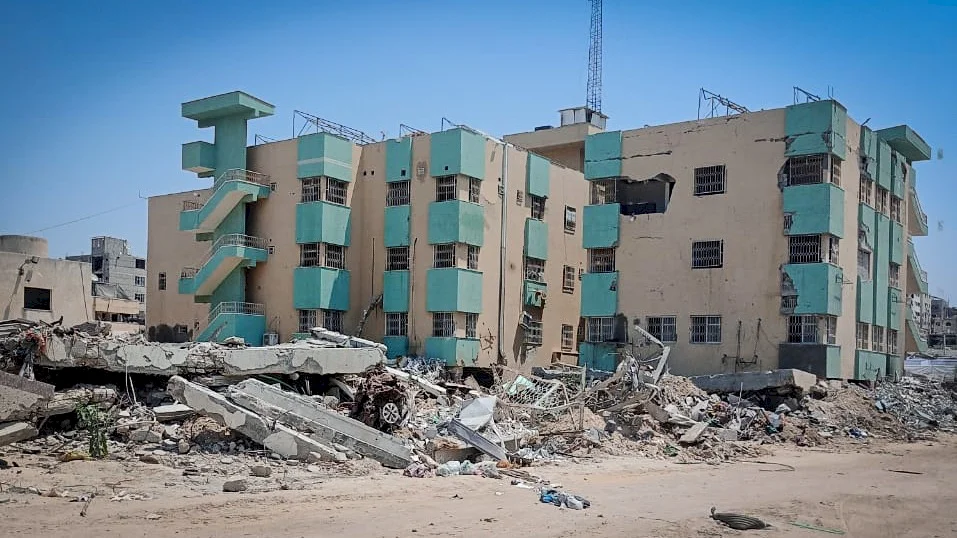 After destruction
 After rehabilitation
Specialized Pediatric Hospital in Gaza City, before the war and after repeated destruction
The hospital restarted in early 2025, during a ceasefire, and was badly damaged again later that year. After the October 2025 ceasefire, the team started once more. PCRF has since completed three phases of rehabilitation, covering the pediatric and neonatal intensive care units, inpatient and outpatient clinics, the pharmacy, and an endoscopy unit rebuilt twice. This is one of several infrastructure projects in Gaza, where PCRF has also restored and expanded operating rooms at Al-Aqsa Hospital, and supplied and rehabilitated generators for other health facilities.
“Restoring a hospital is not simply about rebuilding a facility; it is about preserving children’s access to essential healthcare close to home, today and in the years ahead,” Lubna says.
“It’s the lung of the city,” Mahmoud says. For a parent, a working hospital means somewhere to take a child with a fever or an injury. Before PCRF, he worked for large institutions where a project had an end, and then you left. At PCRF, he says, a project is “a child that you don’t leave. It grows with you.”
Bringing specialist care within reach
PCRF’s work with refugee communities in Jordan and Lebanon long predates the current war in Gaza. Its teams help children access medical and surgical care regardless of nationality, including Palestinian and Syrian refugees. In Egypt, its team also helps families displaced from Gaza access medication and surgery. When children need treatment abroad, PCRF favors Jordan where possible, both for its proximity to home and the possibility of returning to Gaza after treatment.
Treatment abroad can make care possible, but separation from home carries its own cost. When Lubna visited children receiving care abroad in early 2024, many asked to return to Gaza. Even amid the destruction, it was their home.
Bringing specialist care closer to home has been central to PCRF’s work for more than 30 years. Its medical missions bring volunteer surgeons and nurses from around the world to operate in hospitals across the region and train local teams. Dr. Imad Tamimi, an oral and maxillofacial surgeon from New Jersey and president of PCRF’s Medical Advisory Board, first volunteered with PCRF in 2007 and went on to carry out regular missions to Nablus. This year, he operated in Gaza on children with cleft lips and palates who had been left untreated for years. “The Palestinian kids are like any kids,” he says. “They deserve to get the best treatment.”
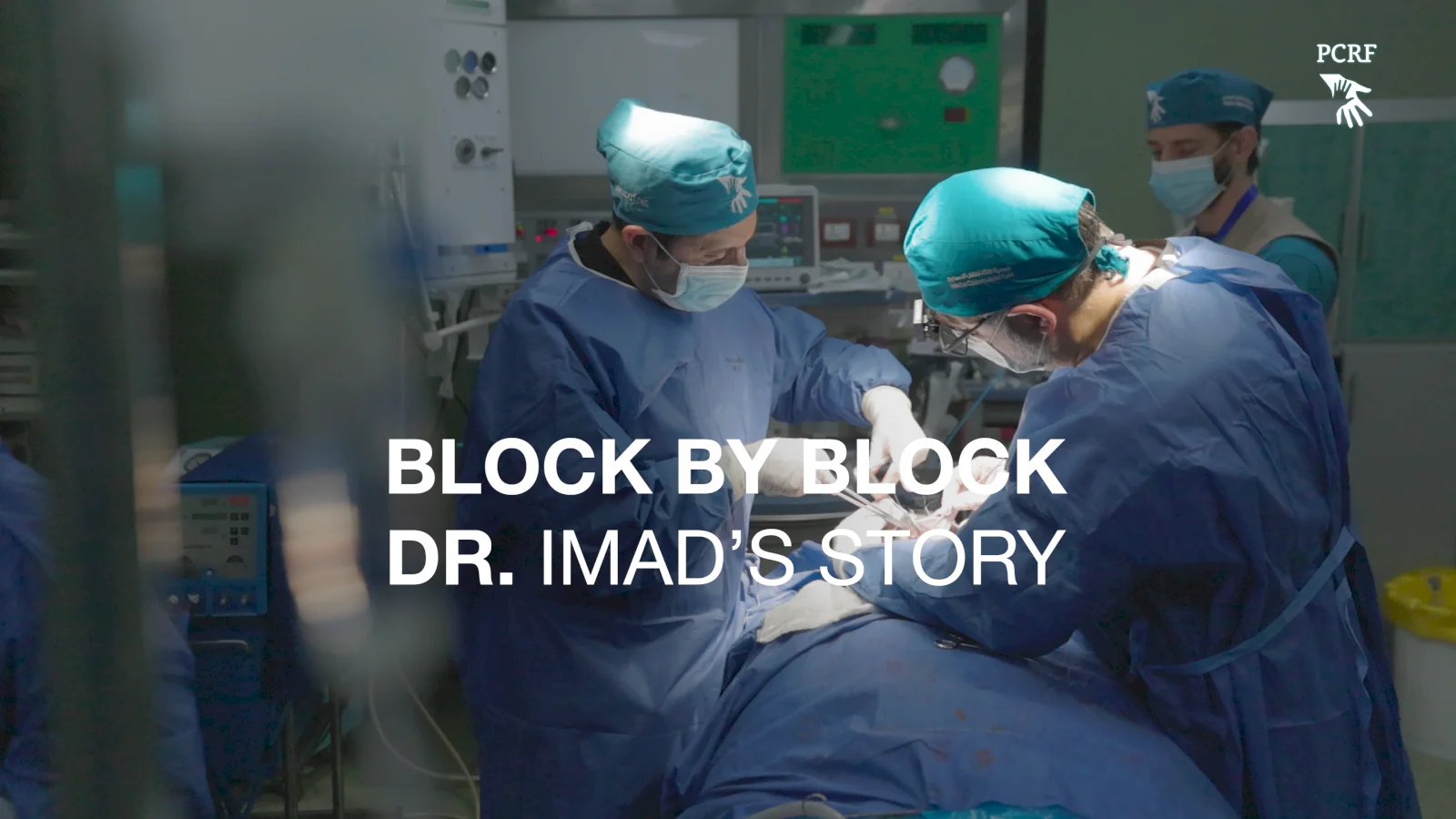
Reaching children this way has become much harder, as visiting teams are increasingly delayed or refused entry.
In the West Bank, a budget crisis in public hospitals means children are waiting longer and longer for surgery. PCRF’s local medical missions bring Palestinian surgeons together to treat them in existing public facilities, shortening the waiting lists and easing the pressure on an overstretched health system. Drawing on local expertise also avoids some of the travel and entry barriers facing international teams. During a pediatric and urology mission at the Ramallah Government Hospital Medical Complex, the team was able to screen 40 children and perform 39 surgeries between August 28 and September 3, 2026.
children assessed in one week at a public hospital in Ramallah
West Bank, 2026surgeries carried out by the same team over those seven days
Pediatric & urology missionThe people sustaining this work
PCRF began in 1991 as a volunteer effort by humanitarians in the United States, bringing children for treatment they could not get at home. That grassroots spirit still carries it. Chapters and student clubs raise funds in their communities, and when children arrive for treatment, they often help their families settle in. Dr. Imad speaks at chapter events to help supporters understand what children are living through and encourage them to stay involved.
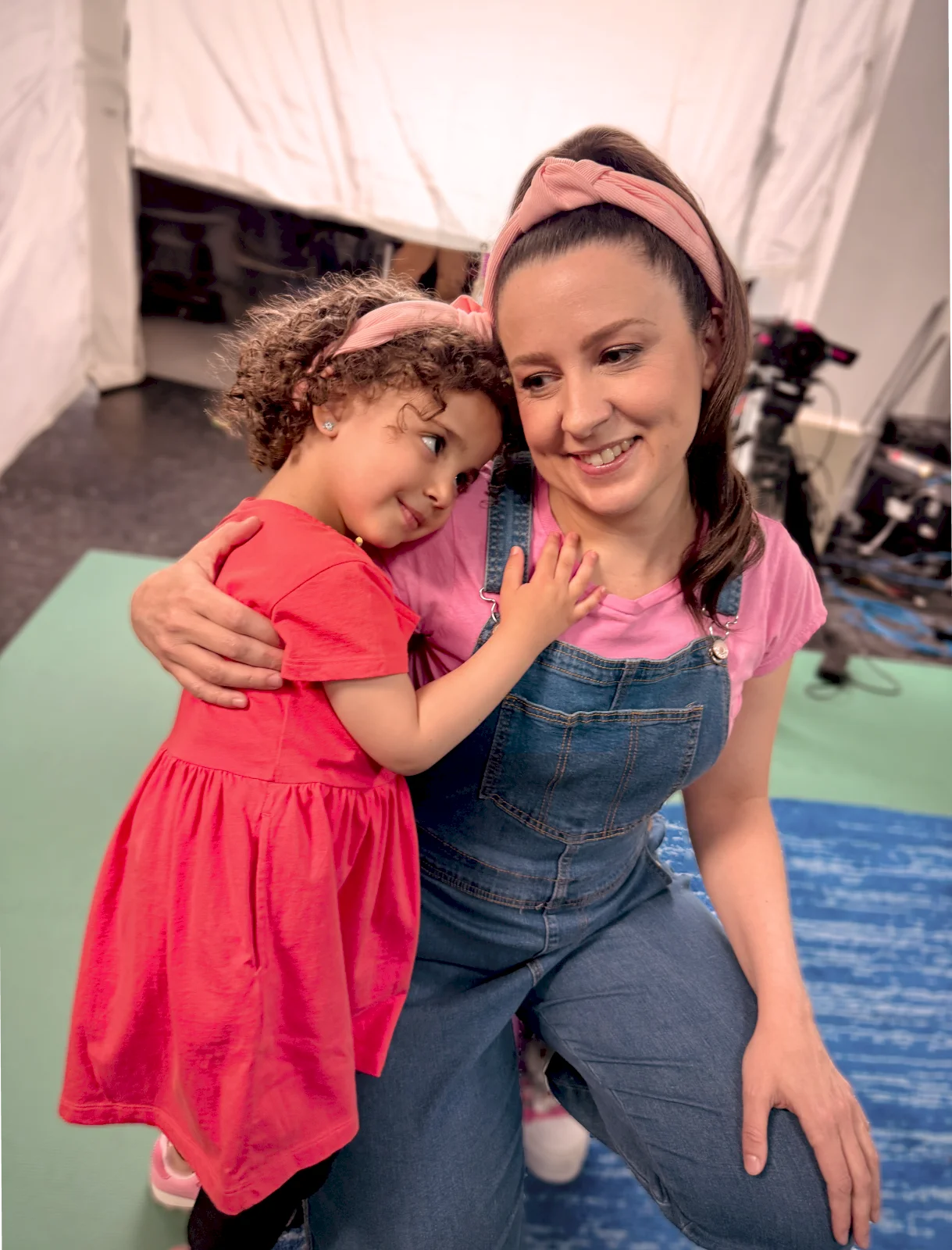
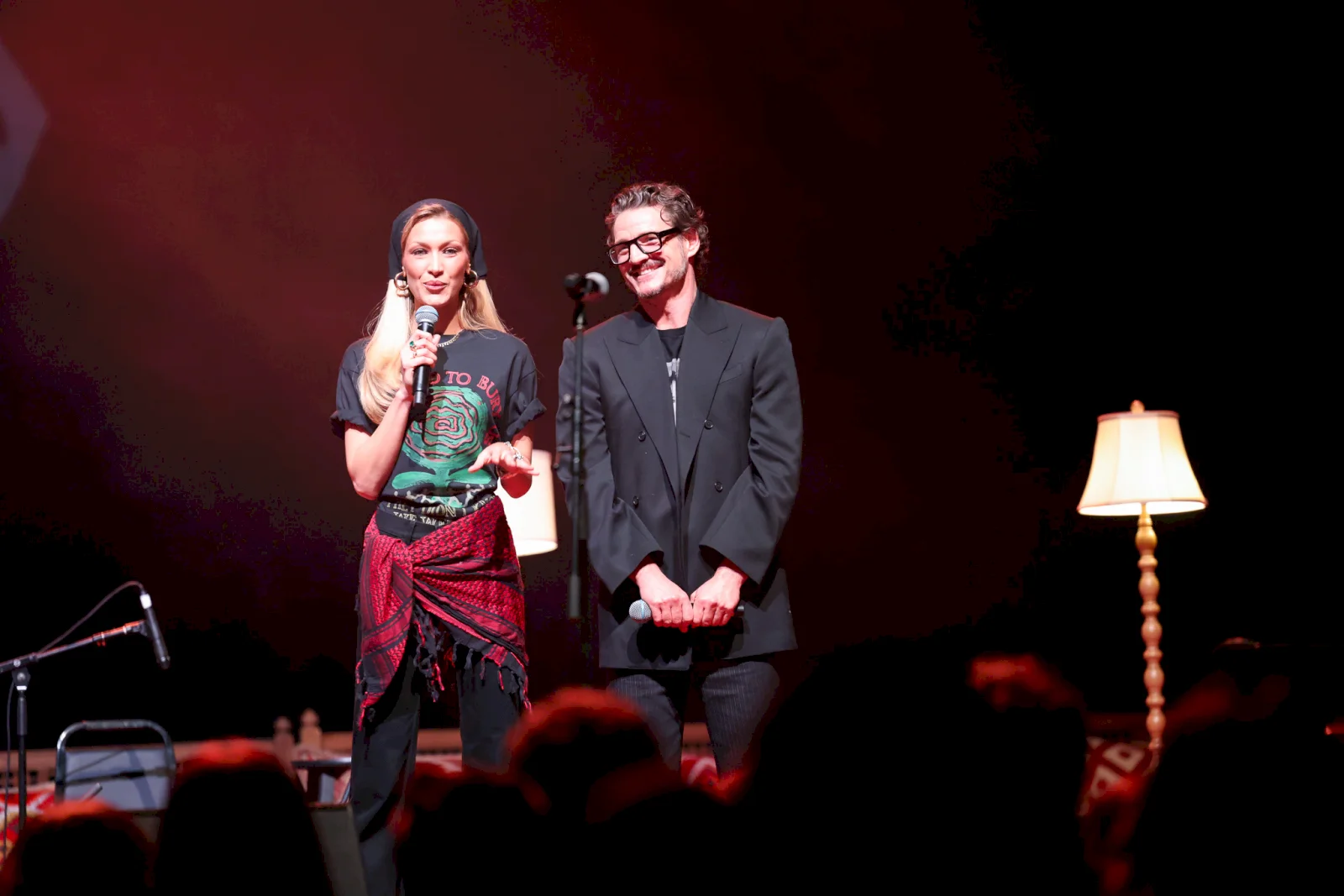
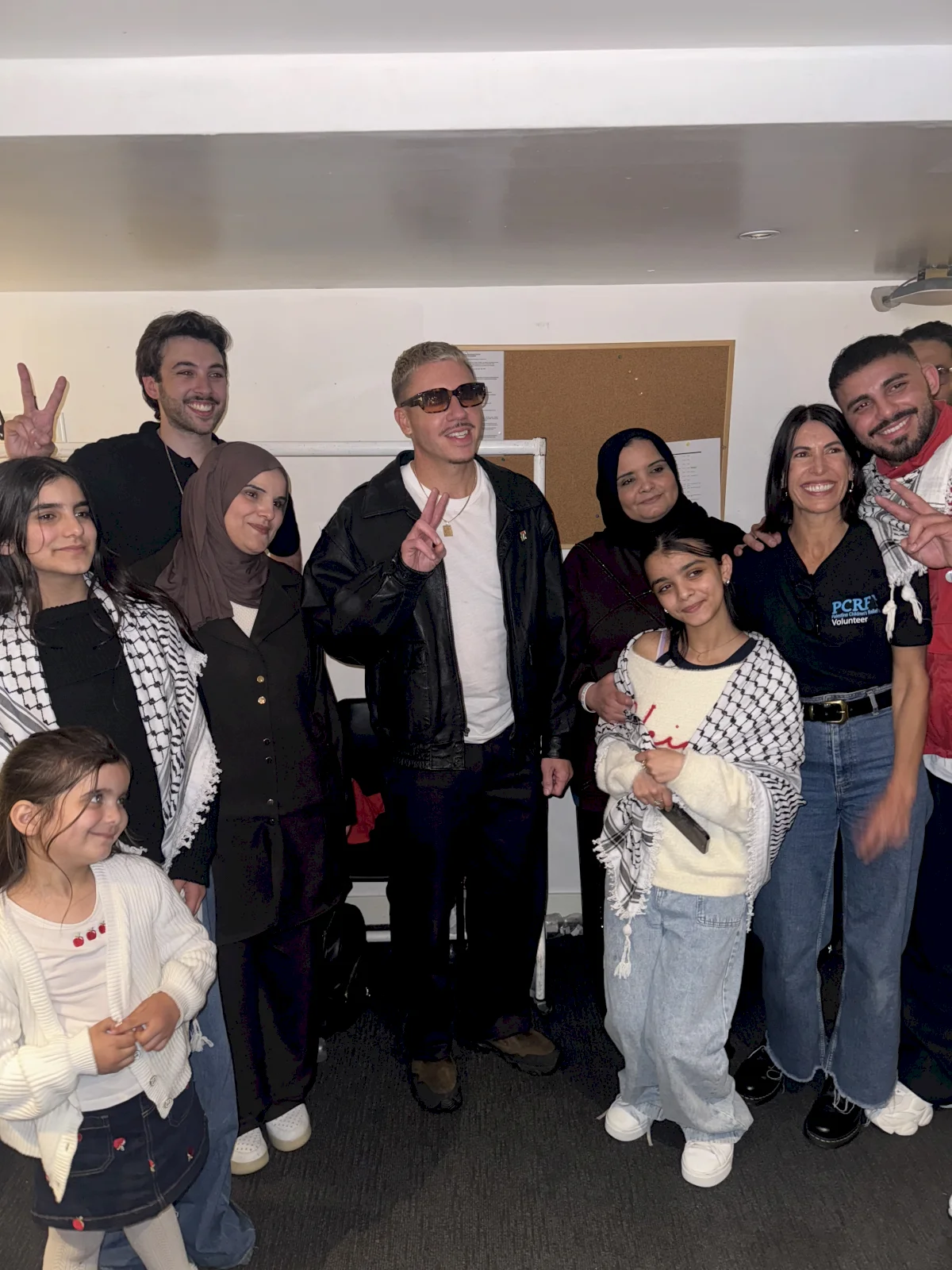
As the crisis in Gaza unfolded, artists and public figures brought PCRF to new audiences. Ms. Rachel became a PCRF global ambassador in 2025, and in January 2026 Ayham met artists backstage at the Artists for Aid concert in Los Angeles.
In September 2026, Macklemore pledged $1 million to six organizations supporting Palestinians including PCRF, and Ms. Rachel matched his pledge with a $1 million gift to PCRF. PCRF is also one of 12 beneficiaries of the Macklemore & Friends Free Palestine Tour.
PCRF will use its share of Macklemore’s pledge and of the tour proceeds to support its programs in Gaza and the West Bank, including medicines that are urgently needed and currently in short supply. Ms. Rachel’s gift is unrestricted, so PCRF can respond across its programs as children’s needs and conditions on the ground change.
For Lubna, the concern is what happens when that attention fades. A ceasefire or a decline in news coverage, she explains, can leave people far away believing the need has passed. Yet children still need treatment, and families continue to face displacement and the loss of essential services.
“Large gifts and institutional partnerships allow us to undertake major initiatives, but there is something equally powerful about a community of people who give consistently, even in smaller amounts, year after year.”
Every part of this work, from a monthly food parcel to a rebuilt hospital ward, is a piece of the bridge Vivian describes. “Your support helps us build that bridge,” she says, “providing urgent care and sustaining children through their recovery and as they grow.”
Ayham hopes to return to Gaza and tell his friends that he didn’t forget them, and that he spoke about them while he was away. He wants to be back with his family, in the place where he grew up. As Lubna puts it: “Every child deserves the chance not just to survive, but to have a dream and a future.”
Stay involved
Palestinian children need us today, and they will need us tomorrow.
Give to the General Fund
A one-time or monthly gift supports PCRF’s work where resources are needed most.
DonateGet involved
Volunteer with PCRF, including as a medical volunteer, or join a chapter near you.
Share this story
Help others understand why Palestinian children need continued support.
Receive updates from PCRF
Stories and news from our work with children, in your inbox.
Learn more about how PCRF uses donations and plans for continuing care. Read the donor FAQs.